

Transparent LED Film Screen vs Traditional LED Display:Key Differences Explained
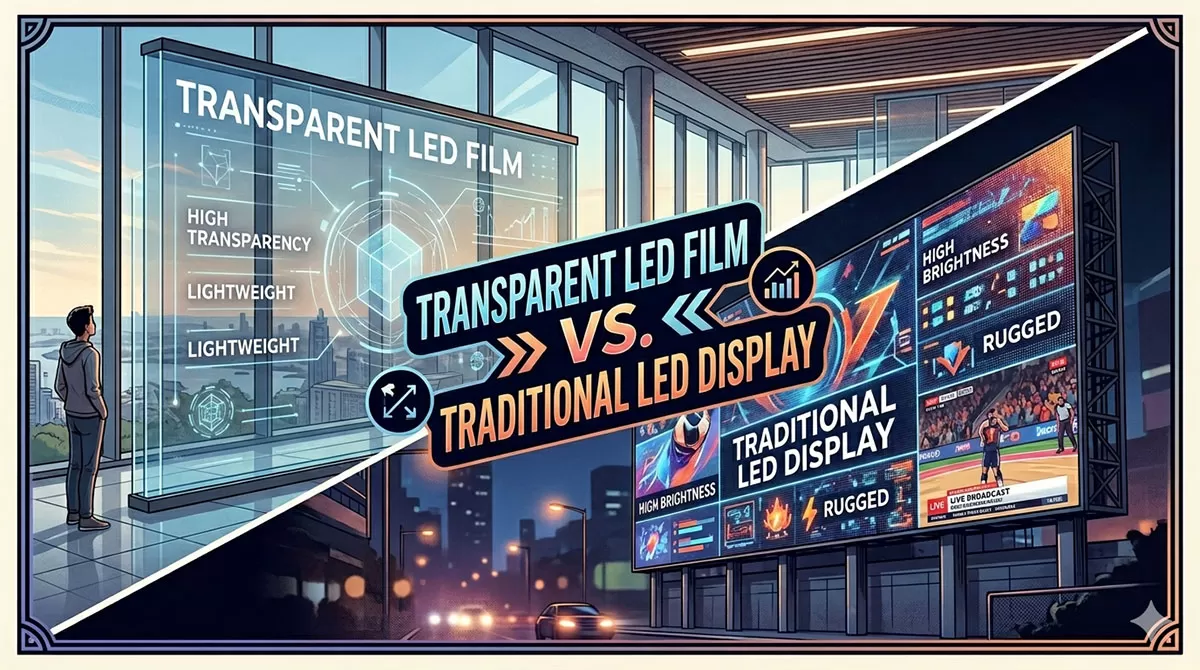
Choosing the right LED display technology for your project often comes down to one critical trade-off: does the space behind your screen need to stay visible, or is full brightness and opacity the priority? Transparent LED film and traditional LED displays each excel in different scenarios. This guide compares them across every key dimension — weight, transparency, installation, cost, and durability — so you can make a confident decision.
According to the Grand View Research LED Display Market Report, the global LED display market is growing at over 13% CAGR, driven largely by demand for transparent and see-through display formats in retail and architecture. Understanding the technology differences has never been more commercially important.
At a glance: quick comparison table
The table below covers all three main display types based on verified product specifications. Use it as a quick reference before diving into the detail.
| Specification | Adhesive Transparent LED film | Structure Transparent LED | Conventional LED |
|---|---|---|---|
| Weight | ≤3.5 kg/m² | ≤10 kg/m² | ≤35 kg/m² |
| Screen thickness | ≤3 mm | ≤10 mm | ~100 mm (incl. power box) |
| Power box depth | 60 mm | 80 mm | ~100 mm |
| Transparency rate | 90%–95% | 60%–90% | 0% |
| Installation | Adhesive to glass — no frame | Fixed / Hanging, simple frame | Fixed, heavy frame |
| External structure | Not required | Simple frame | Heavy frame |
| Flexibility | Bendable | Fixed angle only | Fixed angle only |
| PCB type | Invisible thin-film circuit | Traditional PCB | Traditional PCB |
| Drive mode | Static drive | Dynamic scanning | Dynamic scanning / Static |
| Heat dissipation | Natural cooling | Natural cooling | Fan required |
| Impact on building | No impact | Medium impact | Major impact |
| Maintenance | Peel off film and replace | Remove panel | Remove module |
| Waterproof rating | IP65 (film surface) | IP30–IP65 | IP30–IP65 |
| Shock & dust resistance | Yes (built-in) | Only with GOB treatment | Only with GOB treatment |
| Available pixel pitch | P4, P5, P6, P8, P10, P15, P20 | — | — |
What makes transparent LED film different?
Transparent LED film is a self-adhesive display layer that bonds directly to an existing glass surface — a shop window, a glass curtain wall, or a glass partition — without any supporting frame. To understand the underlying mechanism in depth, read our guide on how transparent LED film screen works.
Traditional LED displays are opaque panel systems mounted in front of or in place of a surface,block everything behind them entirely.
Transparency rate: 90%–95% vs 0%
Adhesive LED film achieves a transparency rate of 90%–95%, meaning nearly all natural light continues to pass through the glass beneath it. Structure transparent LED screens reach 60%–90%. Conventional LED screens deliver 0% transparency — they are fully opaque by design.
This difference is fundamental. For a luxury retail boutique that depends on window displays to attract foot traffic, or an airport terminal that must remain bright and open, adhesive LED film preserves the visual environment while adding dynamic digital content. A conventional LED screen would block that environment entirely. Research by the RetailX Global Commerce Report finds that window display quality is among the top three factors influencing in-store footfall decisions.
Weight and structural load
Weight is a critical factor in architectural and retrofit installations:
- Adhesive LED film: ≤3.5 kg/m² — negligible structural load, compatible with standard commercial glazing systems
- Structure transparent LED: ≤10 kg/m² — lightweight, but requires a simple frame
- Conventional LED: ≤35 kg/m² — requires a heavy-duty steel frame and, in many cases, a structural engineering review
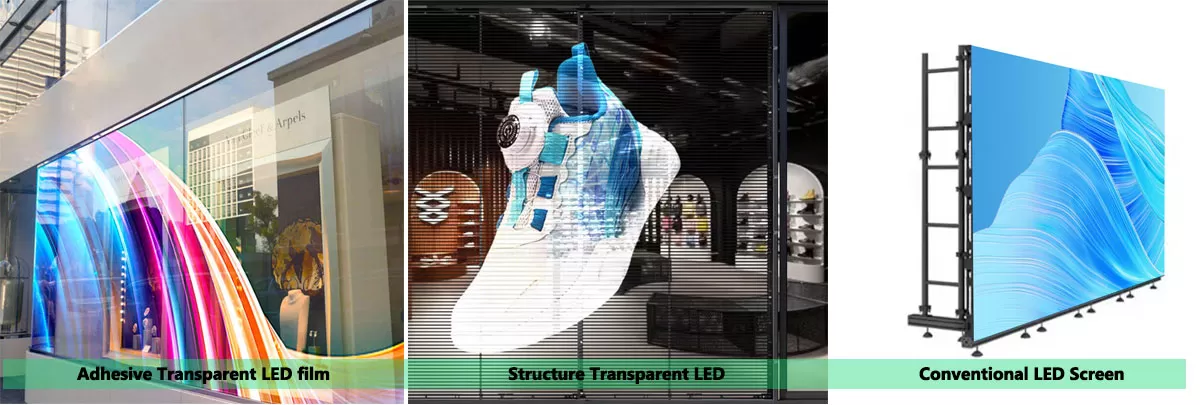
For retrofit installations on existing buildings — particularly those with glazed facades — the low weight of LED film is a decisive advantage. Adding a conventional LED screen to a glazed facade typically requires planning permission and structural reinforcement. LED film does not. The RIBA resource on digital signage in architecture notes that lightweight display technologies are rapidly becoming the default specification for glass-heavy commercial builds.
Installation: peel-and-stick vs full cabinet setup
The installation method directly affects project cost, timeline, and disruption to your space.
Adhesive LED film — no frame required
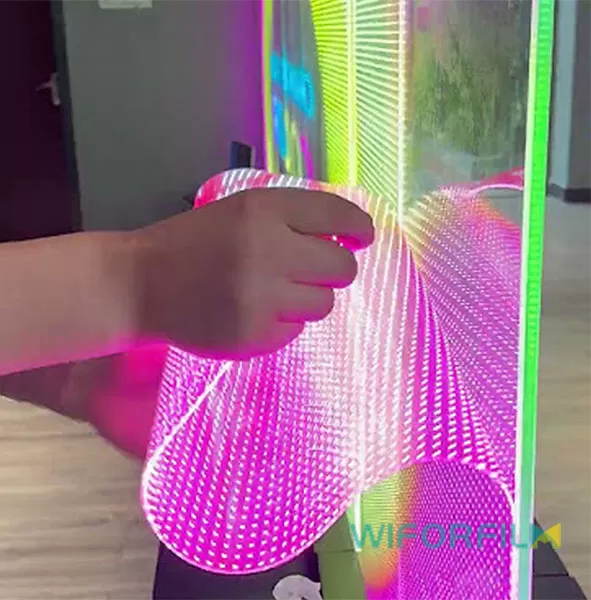
Adhesive LED film installs like a large-format window film. The screen surface (≤2.5 mm thick) adheres directly to glass, while a slim power box (60 mm) mounts discreetly at the edge. No frame, no drilling, and no structural modifications are required. As explained in our Adhesive Transparent LED Film Screen installation guide, the entire setup can usually be completed in hours rather than days.
Because it does not affect the existing structure, LED film is the only viable option for historic buildings, leased retail units, or any space where permanent alteration is prohibited. Maintenance is equally simple: if you need to move it to another location, simply peel it off according to the factory instructions and stick it on the new installation site.
Structure transparent LED — simple frame
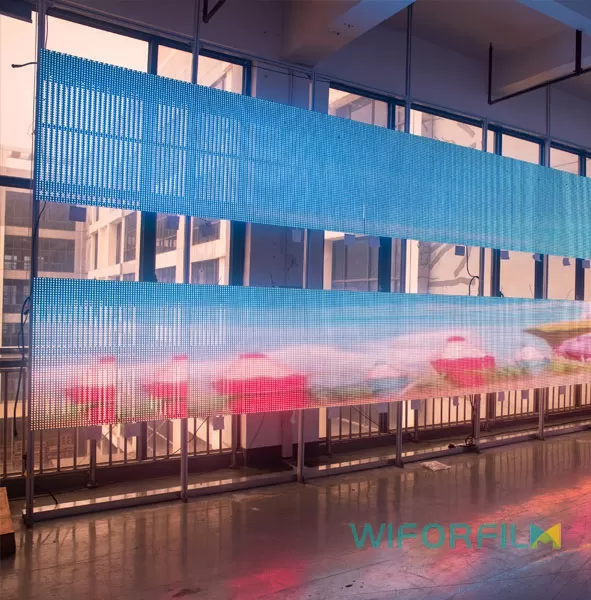
Structure transparent LED screens require a simple frame for mounting and can be installed in fixed or hanging configurations. The power box sits at 80 mm depth. Maintenance involves removing individual panels. This is well-suited to purpose-built installations where modest structural work is acceptable and 60%–90% transparency meets the brief.
Conventional LED — heavy frame and fan cooling
Conventional LED cabinets require a heavy steel frame, fixed mounting, and active fan cooling. Screen depth including the power box reaches approximately 100 mm. Maintenance requires removing and replacing individual modules by trained engineers. The installation footprint is significant and essentially permanent.
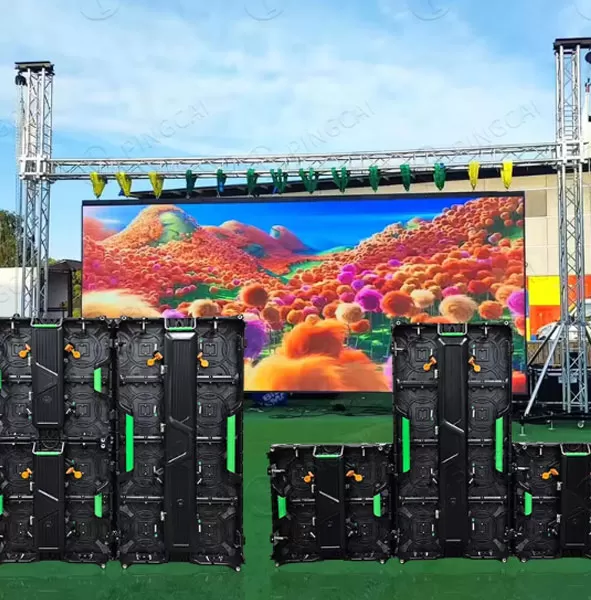
Cost comparison: upfront investment vs total cost of ownership
LED film typically carries a higher unit cost per square metre than conventional LED panels. However, the total cost of ownership often tells a different story when you account for installation, operation, and maintenance.
Installation cost
Conventional LED requires structural framing, civil works, crane access in some cases, and extended installation time. LED film requires none of these. For a medium-scale retail installation, savings on installation can offset a significant portion of the higher unit cost.
Power consumption and operating cost
LED film uses a static drive system, which is inherently more energy-efficient than the dynamic scanning drive used in most conventional and structure transparent LED screens. Static drive eliminates multiplexing overhead, resulting in lower power draw per square metre. According to the IEA Digitalisation and Energy report, energy efficiency is now a primary procurement criterion for commercial display systems in the EU and increasingly in North America.
Maintenance and lifespan
Conventional LED modules require trained technicians to remove, test, and replace components — generating labour costs and display downtime. LED film maintenance is straightforward: peel off the affected section and apply a replacement. Film panels are also inherently resistant to falls, cracks, collisions, and dust ingress — a durability advantage that structure and conventional LED screens do not share without the optional GOB (Glue on Board) treatment.
For a detailed breakdown of which specifications matter most to your buying decision, see our transparent LED film screen selection guide.
When should you choose transparent LED film?
Ask yourself three questions before specifying your display solution:
- Does the space behind the screen need to remain visible? If yes, only transparent LED film or structure transparent LED can meet that requirement — and adhesive film delivers the highest transparency at 90%–95%.
- Is the installation surface an existing glass facade, shop window, or glazed interior? If yes, adhesive LED film is designed precisely for this application.
- Are structural modifications restricted or undesirable? If yes, LED film is the only viable option — no frame, no drilling, no permanent impact on the building.
If all three answers are yes, adhesive transparent LED film is the clear choice. If transparency is not required and maximum brightness or very fine pixel pitch is the priority, a conventional LED screen will serve you better.
FAQs
Why are transparent LED film screens becoming popular in modern architecture?
Transparent LED film screens integrate digital media with building design without blocking natural light or altering the exterior appearance of glass structures. Architects and designers increasingly prefer this technology because it can transform glass façades into dynamic digital displays while maintaining high transparency. In addition, the installation process requires minimal structural modification, making it suitable for modern commercial buildings, shopping malls, and retail storefronts. As smart cities and digital advertising continue to expand, transparent display solutions are becoming an important part of contemporary architectural design.
Are transparent LED film screens the same as transparent LED displays?
Transparent LED film screens are a specialized type of transparent LED display technology. Traditional transparent LED displays typically use rigid transparent panels with LED strips mounted on frames. In contrast, LED film screens use flexible film substrates with embedded LED chips, allowing the display to be extremely thin and directly applied to glass surfaces. While both technologies offer transparent visual effects, LED film screens are generally lighter, more flexible, and easier to install.
Do transparent LED film screens require a steel structure like traditional LED displays?
No, transparent LED film screens usually do not require a steel support structure. Conventional LED displays often rely on heavy cabinets and metal frames to support the modules. By comparison, LED film screens are lightweight and flexible, allowing them to adhere directly to glass surfaces. This significantly reduces installation complexity, structural requirements, and overall project costs.
Where are transparent LED film screens commonly used?
Transparent LED film screens are widely used in retail storefronts, shopping malls, glass curtain walls, corporate showrooms, airports, and exhibition centers. They are particularly suitable for locations where maintaining transparency and natural daylight is important while still delivering high-impact digital media content and advertising displays.
Are transparent LED film screens more expensive than traditional LED displays?
The cost of transparent LED film screens varies depending on factors such as technology type, pixel pitch, and installation requirements. Although the price per square meter may sometimes be higher than traditional LED displays, the overall project cost can be lower because installation is simpler and structural support requirements are minimal. For more information, please refer to the transparent LED film screen price guide.
Is maintenance easier for LED film screens compared to traditional LED video walls?
Maintenance can be simpler for LED film screens because the system structure is lightweight and modular. Individual sections can often be serviced or replaced without dismantling large structural components, which reduces maintenance time and operational disruption compared with traditional LED video wall systems.
What is the typical transparency rate of a transparent LED film screen?
Most transparent LED film screens provide transparency rates between 90% and 95%, depending on the pixel pitch and display design. Higher transparency allows more natural light to pass through the glass, helping maintain indoor brightness and visibility. Manufacturers typically balance transparency and pixel density to achieve both clear visual performance and seamless architectural integration.